How AmIMotion locates a tag.
A tag sends a pulse a few nanoseconds long. Anchors note when it arrives and where it came from. AmIHub works out the spot.
AmIMotion locates tags with ultra-wideband (UWB) radio, to IEEE 802.15.4z. An AmIGo tag sends a pulse a few nanoseconds long. Each AmIMo anchor in range records its time of arrival and its angle of arrival. AmIHub compares the times between anchors (time difference of arrival, TDoA) and the angles, and works out a 3D position. With AmIMo anchors that is down to ±10 cm, typical. How close depends on your floor. AmIMotion is built on the FiRa and omlox specifications.

Light travels about 30 cm in a nanosecond.
So the time a pulse takes to reach each anchor says how far it went. Small timing differences between anchors become a position.
Time
Each AmIMo anchor records when the pulse arrives. The differences between anchors place the tag. This is time difference of arrival, TDoA.
Angle
An antenna array in each AmIMo reads the direction the pulse came from, side to side and up and down. So fewer anchors fix a position, and height counts.
The map
AmIHub combines the times, the angles and your floor map into one 3D position, stamped with the time it was seen.
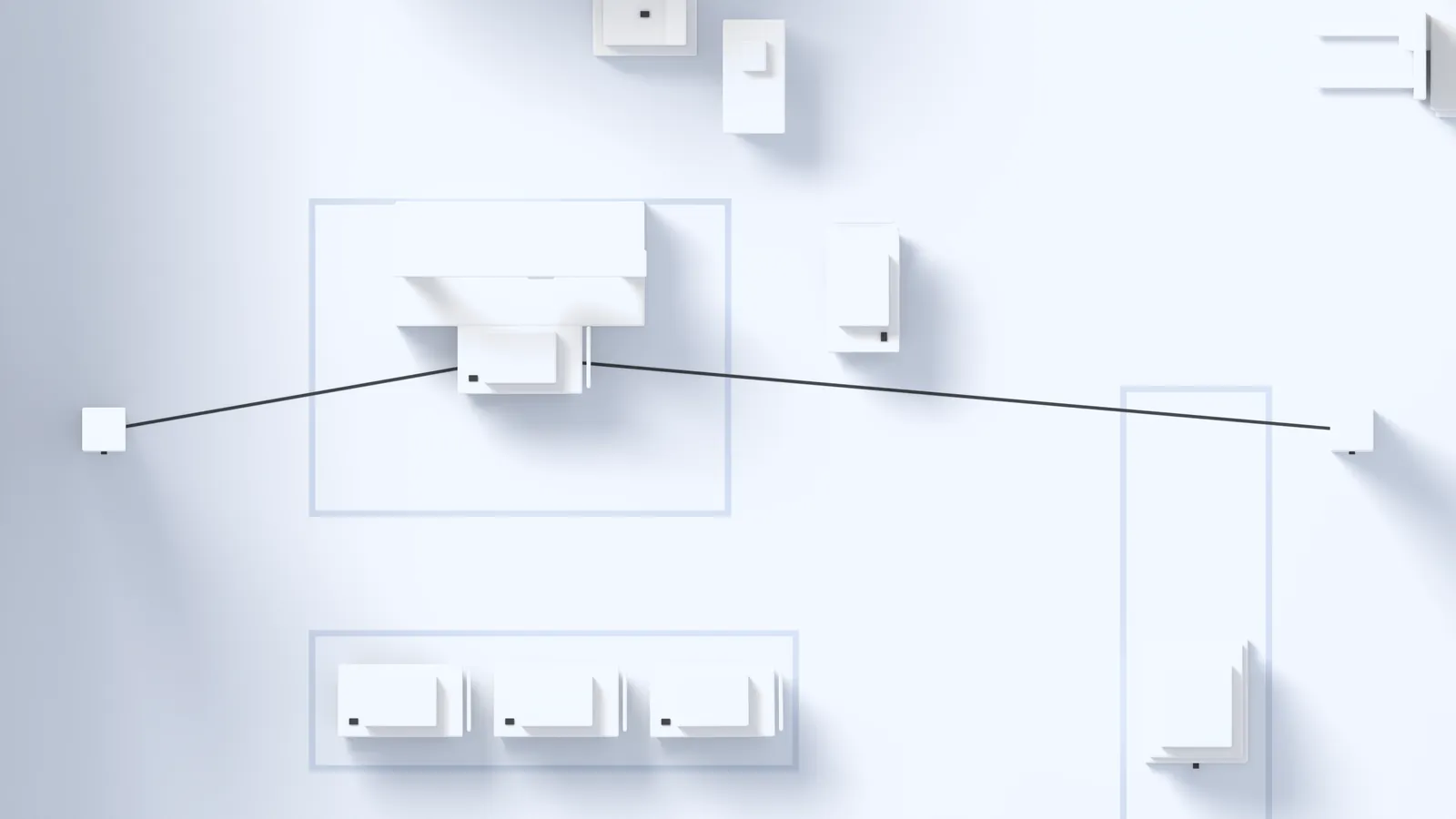
Steel and racking.
What they do to the signal.
Steel and racking bounce radio around a hall. Each echo arrives a little after the direct signal. A UWB pulse is so short that the direct signal and its echoes arrive apart, so AmIMo can tell them apart.
AmIHub adds filters for places where the direct path is blocked. Racking, ceiling height and steel still change how far each anchor reaches. That is why every floor starts with a survey, and why the final anchor count comes from it.
How close a position is depends on your floor. You measure it on yours in the pilot, in the hard spots as well as the easy ones.
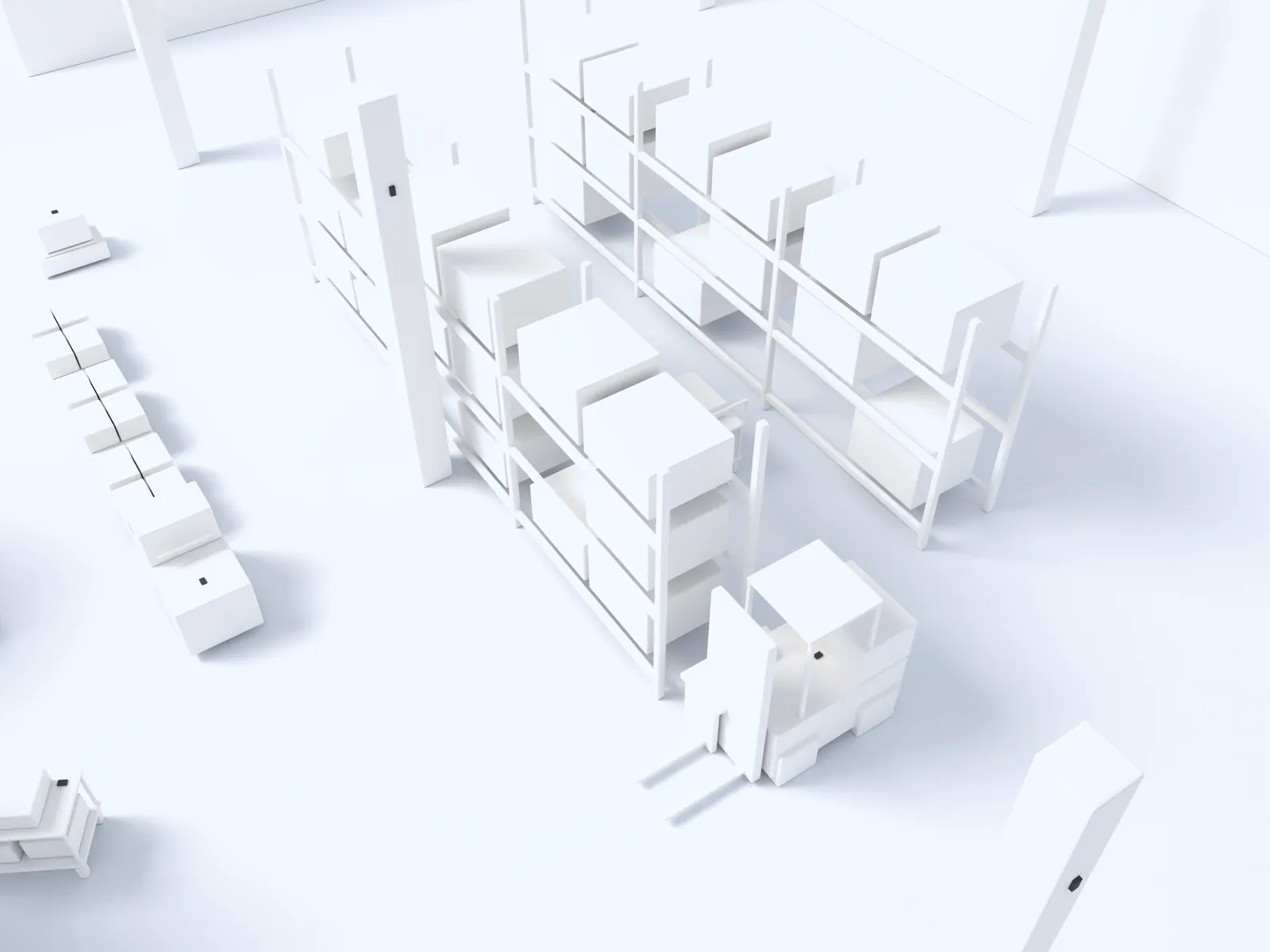
When something goes quiet.
A tag at rest
AmIGo sleeps when it stops. The map shows where it was last seen, and when.
A tag out of view
If a load hides a tag, or it leaves the area the anchors cover, the map keeps its last-seen spot and time.
An anchor goes dark
AmIHub raises an alert when an AmIMo anchor stops reporting, so your team knows which one to check.
AmIMo sends its data to AmIHub over Wi-Fi, and Ethernet is also an option. How your network design handles an outage is part of the site survey.
Choose the method per zone.
You switch modes per zone in AmIHub, with no hardware swap.
| Mode | How it works | Best for |
|---|---|---|
| UL-TDoA | The tag sends; anchors compare when it arrived | Thousands of low-power tags across a floor |
| DL-TDoA | Anchors send; the device works out its own position | Devices that work out their own position |
| AoA with two-way ranging | The angle, plus a timed ping and reply | Precise gates, docks and cells |
| BLE and Wi-Fi FTM | Bluetooth ranging and Wi-Fi fine timing from the same anchors | BLE and Wi-Fi devices, and yards. Device support confirmed per site |
Which modes your hardware revision supports is in the datasheet, shared under NDA.
Open standards.
AmIMotion is built on the FiRa and omlox specifications. Its UWB radio follows IEEE 802.15.4z HRP on channels 5 and 9. AmIHub has an omlox hub interface, so your location data is not tied to one vendor's format. AmIMotion claims no formal certification.
- 802.15.4z
- The IEEE UWB standardHRP, channels 5 and 9
- FiRa · omlox
- Built on the specificationsNo certification claimed
- 3 radios
- UWB, BLE, Wi-Fi FTMOn the same anchors
- ±10 cm
- Down to, in 3DTypical, with AmIMo anchors. Depends on your floor
Questions about the technology.
How does UWB measure position?
An AmIGo tag sends a pulse a few nanoseconds long. AmIMo anchors record its time of arrival (time difference of arrival, TDoA) and its angle of arrival. Light travels about 30 cm in a nanosecond, so that timing places the tag to centimetres. AmIHub works out the 3D position.
Which UWB RTLS supports FiRa?
AmIMotion is built on the FiRa and omlox specifications, and its UWB radio follows IEEE 802.15.4z. It claims no formal certification.
Which RTLS works with UWB, BLE and Wi-Fi on the same anchors?
AmIMotion. AmIMo anchors offer UWB, BLE ranging and Wi-Fi FTM from the same unit, so one install can serve more than one kind of device. Wi-Fi device support is confirmed per site.
How accurate is AmIMotion?
Down to ±10 cm in 3D, typical, with AmIMo anchors. How close depends on your floor, so you measure it on yours in the pilot.
Does UWB work in a factory full of steel and racking?
A UWB pulse is short enough that AmIMo can tell the direct signal from its echoes off steel, and AmIHub filters places where the direct path is blocked. Racking and steel still change each anchor's reach, so a site survey sets the anchor count.
Does AmIMotion integrate with SAP or an MES over MQTT?
AmIHub sends each zone entry and exit over MQTT and offers REST, WebSocket and an omlox hub interface. The connector for your SAP, MES or ERP is confirmed for your site.
Read next.
See it on a live map.On a short call we show the live map and an AI query, on real AmIHub data.Book a call